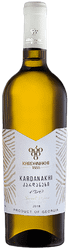
Kardenakhi
Overview
Kardenakhi is one of Kakheti's most traditional and prestigious Protected Designations of Origin, famed for dessert and fortified white wines crafted mainly from Rkatsiteli (რქაწითელი), with additions of Khikhvi (ხიხვი) and Kakhuri Mtsvane (კახური მწვანე). Located near the village of Kardenakhi in Gurjaani municipality, the zone has long been associated with Georgia's finest naturally sweet and strong wines.
Long before modern appellation laws, Kardenakhi wines - historically known as “Kardenakhuri” - were prized exports in the 19th century, valued for their richness, balance, and remarkable longevity. Today, the PDO remains a living link to Georgia's historic reputation for noble, age-worthy sweet wines.
Geography & climate
The Kardenakhi PDO occupies a compact area on the right bank of the Alazani River, between the villages of Gurjaani and Vachnadziani, at elevations of 250-600 meters above sea level. Vineyards are planted on heavy clay and loam soils layered with limestone and sand.
The climate is warm and relatively dry, with extended autumns that allow grapes to remain on the vine well past full ripeness. This late harvest concentrates sugars and flavors naturally, creating ideal conditions for dessert and fortified wine styles.
Authorized grape varieties
- Rkatsiteli - primary variety
- Khikhvi - used to enhance aroma and richness
- Kakhuri Mtsvane - adds freshness and balance
All grapes must originate exclusively from the officially defined Kardenakhi microzone.
Wine styles & characteristics
- Color: deep golden to amber
- Aroma: honey, dried apricot, fig, caramel, and tea leaf
- Taste: rich and smooth, lusciously sweet, supported by vibrant acidity
- Alcohol: typically 12-14% (higher for fortified styles)
- Style: concentrated, structured, and age-worthy
Both dessert and fortified expressions share Kardenakhi's defining trait: intensity without heaviness, achieved through balance between sweetness, acidity, and structure.
Taste profile
- Aromas: honey, dried fruit, walnut, tobacco, and orange peel
- Palate: dense yet lively, combining sweetness with freshness and depth
- Finish: long and warming, often with nutty or gently oxidative notes from extended aging
Well-made Kardenakhi can evolve gracefully for decades, developing complexity comparable to classic Madeira or Tokaji styles.
Production rules
According to regulations set by Georgia's National Wine Agency:
- Grapes must be sourced exclusively from the Kardenakhi microzone
- Maximum yield: 8 tons per hectare
- Permitted styles: naturally sweet and fortified (strong) white wines
- Minimum alcohol: 12% for natural sweet wines; 17% for fortified styles
- Minimum aging: 3 years, often extended to 5-10 years in oak or large casks
Food pairing
Kardenakhi pairs beautifully with:
- Blue cheeses and aged sulguni
- Foie gras and rich pâtés
- Nut-based desserts, honey pastries, and caramelized fruit
- Dark chocolate and dried fruits
Serve slightly chilled at 12-14 °C in small glasses to highlight concentration and aroma.
Summary
Kardenakhi PDO (კარდენახი) embodies Georgia's noble sweet wine tradition - wines of patience, warmth, and mastery. Crafted from late-harvest Rkatsiteli and companion varieties in Kakheti's sunlit heart, Kardenakhi offers richness shaped by balance and time. It stands as one of Georgia's most enduring expressions of elegance, longevity, and historic craftsmanship.