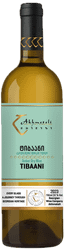
Tibaani
3 min
Shop Tibaani winesOverview
Tibaani is one of Georgia's most traditional PDOs (Protected Designation of Origin), defined by dry amber and white wines made primarily from Rkatsiteli (რქაწითელი). Located near the village of Tibaani in eastern Kakheti, the appellation lies at the foothills of the Tsiv-Gombori Range, an area with an unbroken history of qvevri winemaking stretching back centuries.
The reputation of Tibaani rests on its deeply structured amber wines, fermented and aged with skins and stems in buried clay qvevri. These wines are bold, tactile, and age-worthy, representing one of the purest expressions of traditional Kakhetian winemaking.
Geography & climate
The Tibaani PDO occupies the southern edge of the Alazani Valley, spanning parts of the Dedoplistskaro and Telavi municipalities at elevations between 300 and 600 meters above sea level. Vineyard soils are predominantly alluvial with a high clay and limestone content, alongside pockets of sand and gravel that promote deep root systems.
The climate is dry continental, marked by hot summers, cool nights, and abundant sunshine exceeding 2,200 hours annually. These conditions allow Rkatsiteli to ripen fully while retaining enough acidity to support long skin contact and extended aging.
Authorized grape varieties
- Rkatsiteli - 100%
The exclusive focus on Rkatsiteli highlights the grape's natural resilience and its remarkable ability to carry tannin, texture, and structure through qvevri fermentation.
Wine styles & characteristics
- Color: amber-gold to deep orange
- Aroma: dried apricot, quince, walnut, black tea, and honey
- Taste: full-bodied, dry, and firmly structured, with pronounced tannins and earthy complexity
- Alcohol: 12-13.5%
- Aging: traditional qvevri fermentation and maturation for 6-12 months
Tibaani wines are uncompromising in character, offering depth and texture rather than softness or immediate charm.
Taste profile
- Aromas: dried fruit, chamomile, walnut skin, and orange peel
- Palate: dense and savory, with grippy tannins, mineral tension, and layered complexity
- Finish: long, earthy, and persistent, often with subtle oxidative notes
Tibaani favors structure and evolution over fruit-driven expression, rewarding patience and attention in the glass.
Production rules
As defined by Georgia's National Wine Agency:
- Grapes must originate exclusively from the Tibaani microzone
- Maximum yield: 8 tons per hectare
- Only dry white (amber) wines are permitted
- Alcohol: minimum 11.5%
- Minimum maturation: 9 months in qvevri
Food pairing
The structure and tannin of Tibaani wines pair naturally with rich, savory dishes:
- Roasted lamb or pork
- Mushroom stews, lentils, and walnut-based sauces
- Hard cheeses such as dambal-khacho or aged sulguni
- Grilled vegetables and eggplant-based dishes
Serve at 13-15 °C and consider decanting to allow the wine to fully open.
Summary
Tibaani PDO (ტიბაანი) stands as the archetype of Kakhetian qvevri wine. Made from 100% Rkatsiteli fermented with skins and stems, it is a wine of texture, grip, and time. Tibaani does not aim for modern polish, but for honesty and endurance - a profound expression of Georgia's ancient winemaking discipline.