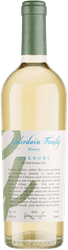
Atenuri
3 min
Shop Atenuri winesOverview
Atenuri is the most celebrated Protected Designation of Origin in Kartli, central Georgia, and one of the country's historic strongholds for both sparkling and still white wines. Centered in the Ateni Gorge near the town of Gori, the appellation has been prized since the 19th century for its refined, high-acid wines made from Chinuri (ჩინური) and Goruli Mtsvane (გორული მწვანე).
The name Atenuri comes from the ancient settlement of Ateni, known for its medieval churches and steep limestone slopes that cradle the vineyards. The wines of Atenuri stand apart for their tension, minerality, and restraint - often described as the cooler, more linear counterpart to the richer whites of Kakheti.
Geography & climate
The Atenuri PDO lies in the upper Mtkvari River Valley within the Gori municipality, at elevations ranging from 480 to 720 meters above sea level. Vineyards are planted on narrow limestone and sandstone terraces along the Ateni Gorge, where slope, exposure, and altitude create a distinctive microclimate.
The climate is moderately humid and notably cooler than eastern Kakheti, with warm days, cold nights, and extended ripening periods. These conditions preserve natural acidity and encourage slow aromatic development - ideal for the crisp, mineral style that defines Atenuri wines.
Authorized grape varieties
- Chinuri - minimum 85%
- Goruli Mtsvane - up to 15%
Chinuri provides high acidity, floral lift, and structure, while Goruli Mtsvane adds roundness and subtle fruit, creating balance and finesse.
Wine styles & characteristics
- Color: pale straw to light gold
- Aroma: green apple, pear, citrus blossom, and wet stone
- Taste: light- to medium-bodied, crisp, and focused, with bright acidity and a dry finish
- Alcohol: typically 11.5-13%
- Style: produced as both still wines and sparkling wines (traditional and Charmat methods)
Across all styles, Atenuri is defined by precision - lean, mineral, and built around freshness rather than weight.
Taste profile
- Aromas: white flowers, lime zest, green apple, and fresh herbs
- Palate: vivid acidity, restrained fruit, chalky minerality
- Finish: crisp, saline, and clean
Atenuri's signature is purity - wines that feel shaped by limestone and altitude as much as by grape variety.
Production rules
According to PDO regulations set by Georgia's National Wine Agency:
- Grapes must originate exclusively from the Ateni microzone
- Maximum yield: 9 tons per hectare
- Permitted styles: dry still and sparkling wines
- Minimum alcohol: 11% for still, 10.5% for sparkling
- Minimum maturation: 9 months before release
Food pairing
Atenuri wines pair exceptionally well with fresh, delicate dishes:
- Seafood, oysters, grilled trout, or herb-roasted chicken
- Georgian dishes such as pkhali, badrijani nigvzit, or herb-forward salads
- Ideal as an aperitif or alongside soft cheeses, caviar, or light starters
- Excellent with creamy soups or citrus-accented cuisine
Serve sparkling styles at 8-10 °C and still wines at 10-12 °C.
Summary
Atenuri PDO (ათენური) is the crown jewel of Kartli - wines shaped by altitude, limestone, and restraint. Whether still or sparkling, Atenuri expresses Georgia's cooler-climate identity through energy, precision, and finesse. Subtle yet confident, it stands among the country's purest and most terroir-driven white wine expressions.